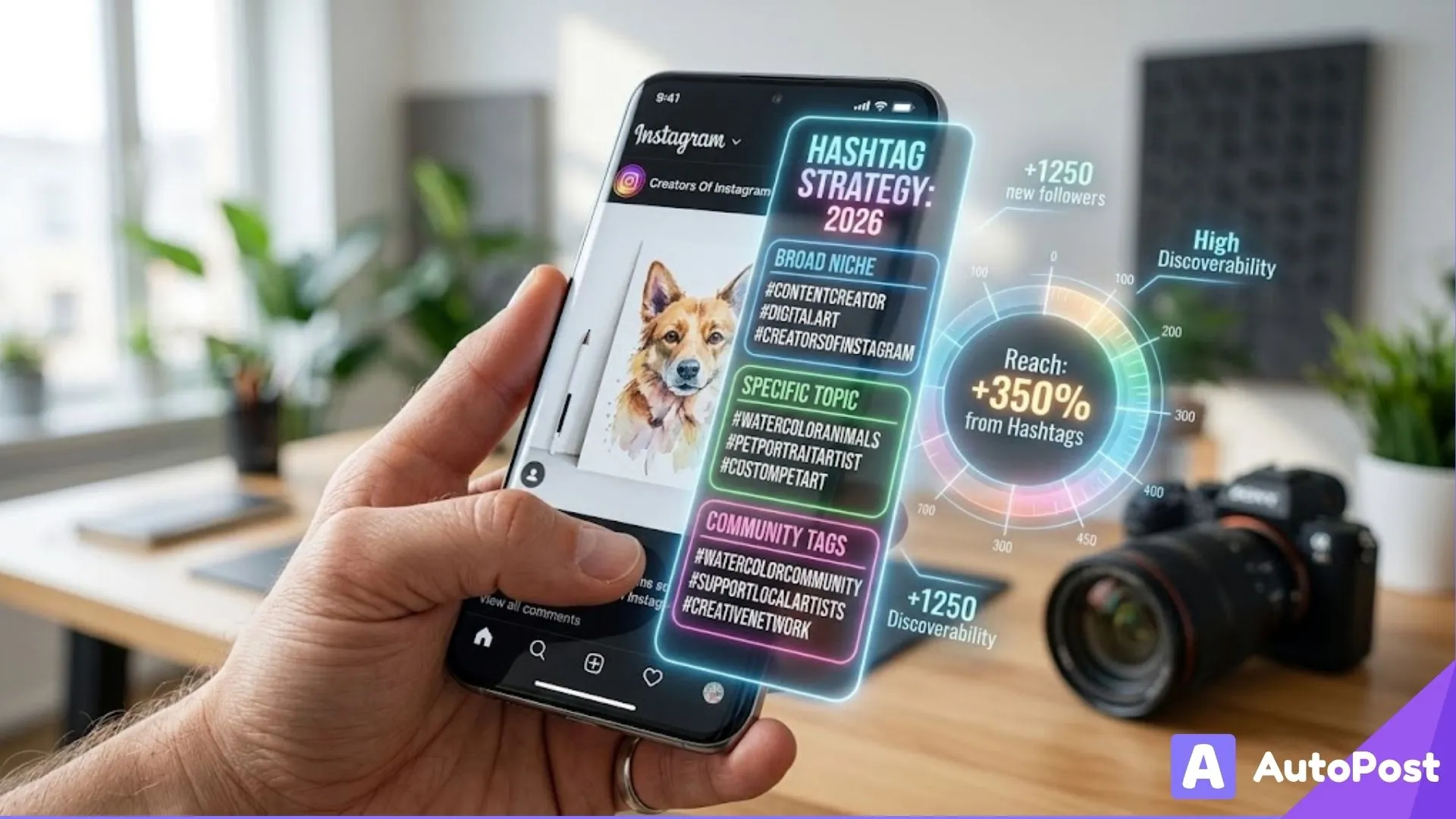
Top Performing Hashtag Combinations For Instagram Growth
Instagram hashtags have been a staple of discovery on the platform for years but their role has evolved significantly. In 2026, hashtags are not a magic bullet that alone drives virality; instead, theyre contextual signals that help Instagrams algorithm understand what your content is about and who should see it first.
This guide breaks down everything you need to know about using hashtags on Instagram in 2026 including how they work, why they still matter, the best hashtag types, and winning strategies to increase your reach and engagement sustainably.
Why Instagram Hashtags Still Matter in 2026
Contrary to some misconceptions, Instagram hashtags are not dead theyve simply evolved.
What hashtags do now:
Provide topic context to the algorithm
Help categorize your content
Connect your posts to relevant interest groups
Improve early discovery among users who haven't seen you yet
Think of hashtags as signal tags they help Instagram understand what your content is about and who its relevant to, especially in early distribution stages.
These phrases reflect practical search intent not just definitions which helps improve relevancy and organic search visibility.
How Hashtags Work on Instagram in 2026 (Algorithm Overview)
Instagrams algorithm considers hashtags as one of several contextual signals when deciding:
Who to test your content with first
Which interest clusters might engage with it
How it should be categorized in Explore or Reels feeds
Important nuance:
Hashtags are not the primary reach driver; strong content quality, watch time (for Reels), caption relevance, user engagement, and posting consistency matter more. But hashtags help reinforce where your content belongs.
They work differently depending on the content format:
Content Type | How Hashtags Influence Reach |
Reels | Helps classify topic early, supports Explore distribution |
Carousel | Aids topic grouping and search discovery |
Feed Images | Provides topical tags for relevance |
Stories | Limited discovery better used for organization than reach |
When Hashtags Actually Help (and When They Don't)
Do hashtags help if your content sucks?
No. Good hashtags don't fix poor storytelling or value. They simply help people who WOULD engage with it find it sooner.
Do hashtags help good content get discovered?
Yes especially in early distribution windows when Instagram tests your content with audiences likely to care.
How Many Hashtags to Use in 2026
Theres no perfect number, but data and platform behavior suggest:
Optimal hashtag count: 5-9 hashtags per post
Why?
Too few = not enough context signals
Too many = signal dilution and possible suppression patterns
Rotation (changing hashtag sets) prevents repetitive signaling which platforms can de-prioritize
Quality > Quantity is key.
The 3-Layer Hashtag Strategy That Works in 2026
Instead of dumping as many tags as possible, use a layered approach:
1. Broad Hashtags (Discovery Layer)
These categorize your content broadly on Instagram.
Example:
#SocialMedia
#Travel
#Fitness
Use 12 max.
Purpose: Helps Instagram understand the overall topic.
2. Niche Hashtags (Relevance Layer)
These describe who your content is for.
Examples:
#SocialMediaTips
#TravelBloggerLife
#HomeWorkoutIdeas
Use 35 per post.
Purpose: Matches your content with specific interest communities.
3. Micro-Niche or Intent Hashtags (Conversion Layer)
These target your precise audience.
Examples:
#SoloTravelEurope
#QuickHIITWorkouts
#ContentCreatorsCommunity
Use 24 per post.
Purpose: Signals highly targeted interest ideal for engagement.
Top Instagram Hashtags to Use in 2026 (By Category)
Below is a practical, reasoned list not random tags grouped so you understand why and when to use each.
Trending & Discovery Hashtags (Use Sparingly)
These help tell Instagram you're participating in broad content trends.
Examples:
#TrendingOnInstagram
#ViralReels
#IGDaily
#ExplorePage
Use sparingly and only when content truly aligns with trend culture.
Engagement & Community Hashtags
These connect you with niche communities actively interacting on Instagram.
Examples:
#SmallCreatorsSupport
#InstaGrowthTips
#ReelsCommunity
#CreatorsUnite
Use these to:
invite interactions
join community conversations
Niche-Specific Hashtags
These define your specific audience and content purpose.
Examples:
#PlantBasedRecipes
#BudgetTravelTips
#RemoteWorkLifestyle
#FashionForAllSizes
Use these to reach users already interested in your content topic.
Micro-Niche / Intent Hashtags
These are gold for intent matching.
Examples:
#VeganMealPrepUnder30
#EuropeBackpackingBudget
#DailyContentChallenge
#WorkFromHomeDeskSetup
These attract users who know exactly what they want and are more likely to engage deeply.
How to Find Winning Hashtags (Data-Backed Methods)
Instead of guessing, use these methods:
1. Analyze Popular Posts in Your Niche
Search relevant keywords and:
open top posts
note recurring hashtags
observe their patterns
Focus on patterns, not one-off tags.
2. Use Instagrams Search Suggestions
Type main topic words into search and watch:
suggested tags
related combinations
rising clusters
This reveals what's currently active.
3. Rotate and Track Hashtags
Winning creators treat hashtags like experiments:
track performance of different sets
review after 20-30 posts
double down on sets that correlate with reach or engagement lifts
Rotation prevents algorithmic signal stagnation.
Common Instagram Hashtag Myths (Debunked)
Myth 1: #FYP guarantees viral reach
False generic tags like #FYP, #ForYou, or #Viral dont deliver relevant signals and often attract random, low-engagement viewers.
Myth 2: More hashtags = more reach
False irrelevant hashtags dilute context and reduce signal clarity.
Myth 3: One hashtag set works forever
False trends and interest clusters shift constantly. Rotate.
Myth 4: Hashtags dont matter anymore
False they matter differently. As context cues, not shortcuts.
Where Not to Use Hashtags
Hashtags matter less in:
Instagram Stories (use them contextually)
Paid ads (algorithm doesnt prioritize them here)
Captions that are already long and keyword-dense
In these contexts, focus on caption copy + CTA + visuals instead of hashtags.
Layering Hashtags With Other Growth Signals
Hashtags are just one signal. Combine them with:
Strong Captions
Ask questions or invite comments
Which one will you try first?
Tell me your favorite
Hook + Context
Reels with compelling hooks + relevant tags get tested faster.
Value First
Clear value in the first 2-3 seconds (Reels) improves watch time and hashtags help signal relevance.
How Tools Like AutoPost Can Help You Master Hashtags
Hashtag research and rotation is tedious unless you systematize it.
AutoPost helps creators:
generate AI assisted hashtag suggestions
save reusable hashtag sets organized by niche
track which sets correlate with engagement spikes
batch schedule optimized posts
compare hashtag performance over time
Instead of guessing tags each time, you build a data-informed hashtag strategy that scales.
Final Thoughts: Hashtags Still Drive Instagram Growth But Intelligently
In 2026, hashtags are not a relic and theyre not magic, they're contextual signals that help Instagram understand your content and match it with the right audience.
The best hashtag practices combine:
relevance
rotation
data-driven discovery
layered tagging
audience behavior insights
When used correctly especially in Reels and niche posts hashtags can significantly improve discoverability, engagement, and long-term growth.
And when paired with strategic tools like AutoPost, you're not just adding tags you're optimizing reach with context, data, and consistency.